
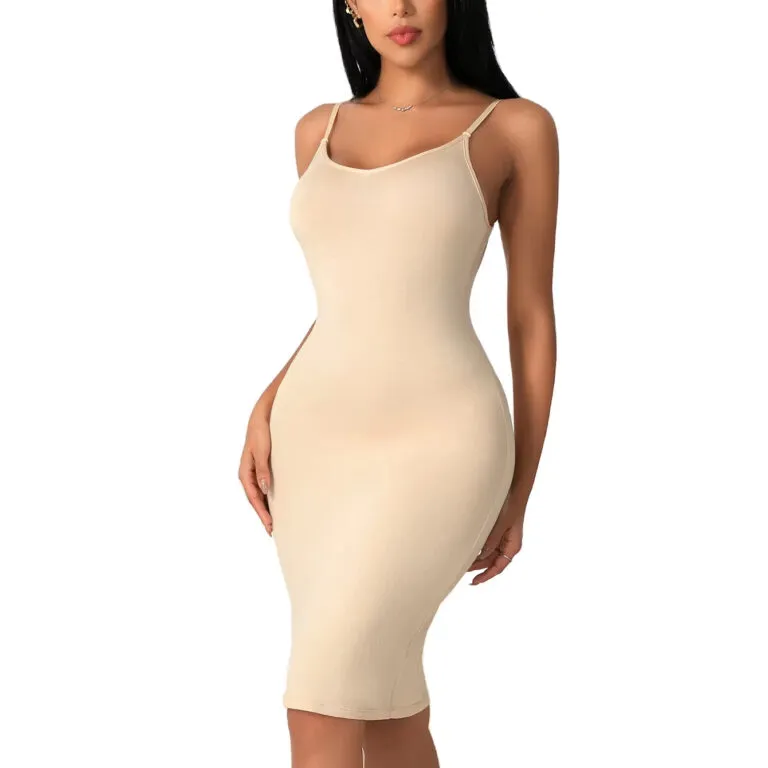
Seamless knit
Suited to smooth body coverage and clean edges; review recovery, transparency and body mapping.
Materials
A fabric is selected for how it behaves in the finished garment. Weight, stretch direction, recovery, opacity, hand feel and edge stability matter more than a generic fibre label.
01 / Decision file
The same fibre blend can perform differently depending on knit structure, weight, finishing and panel placement.
Suited to smooth body coverage and clean edges; review recovery, transparency and body mapping.
Used for structured panels and stronger shaping; review hand feel, elasticity and seam or bond compatibility.
Offers a more structured surface for selected silhouettes; fit and recovery must be proven on the garment.
02 / What to specify
A fibre percentage is not a complete material specification.
Record the material reference and measured weight or gauge used for the approved sample.
State whether stretch is four-way or directional and how the pattern uses it.
Check after repeated stretch, movement and the intended care route.
03 / Test on the garment
Cutting, seaming, bonding and body movement can change the material response.
Check curl, rolling, lifting and bonding compatibility.
Review how materials with different stretch or thickness behave at seams and joins.
Confirm wash, dry and colour behaviour against the buyer’s care instructions.
Questions / short answers
No. Fibre content alone does not define support, recovery or comfort. Knit structure, weight, pattern and construction also matter.
The material can be reviewed against the construction and order scope, but substitution or equivalent options should be confirmed with samples.
Not automatically. The certificate scope should be checked against the material, colour, process and intended claim.
Next / related files
Project review
Send the garment reference, target feel, care route and market requirements for a material development review.